


In a village in Goalpara, Assam, there is a dug-out well with a concrete ring and a depth of 6.7 metres. Wells like this are common across the region.
Nobody had guessed that something in the dark below, about two centimetres long, was waiting to be named.That village has now rewritten a page of Indian zoology. Assam Chief Minister Himanta Biswa Sarma posted on X about the return of a shrub lost for 204 years, and the discovery of two fishes new to science in Goalpara's wells.Lost for 204 years.
Rediscovered in Assam. And below ground, two species new to science.
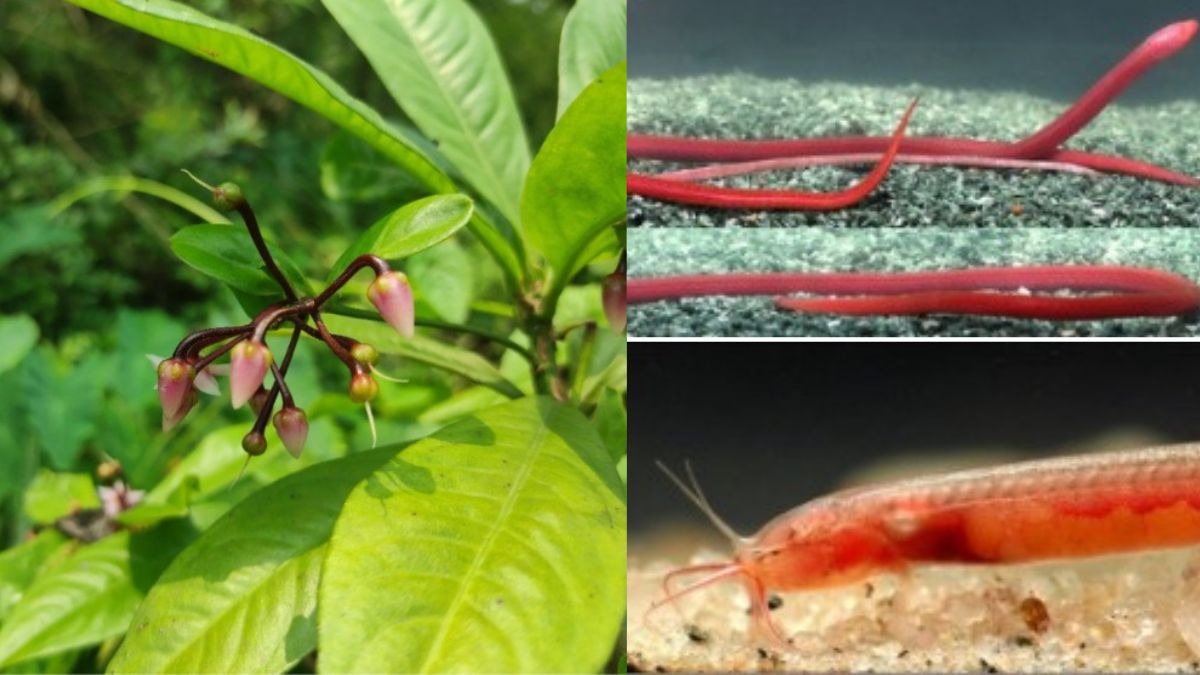
The return of the shrub , Ardisia colorata, and the discovery of subterranean fishes , Gitchak nakana and Rakthamichthys anchi , in Goalpara's wells show what Assam's forests and waters still hold. Protect the home, and the species come back.
Stronger environmental governance and habitat conservation remain our commitment, for every species, for generations to come.— Himanta Biswa Sarma (@himantabiswa) October 22, 2026A SHRUB THAT WENT MISSINGThe shrub is Ardisia colorata, a member of the primrose family. Botanists first described it in 1821, in a gardening periodical called The Botanical Cabinet, according to Kew's Plants of the World Online.
Its native range runs from Assam to Myanmar.Then, the Chief Minister says, it was lost for 204 years. That is not extinction.
A plant can be missed, misnamed or hiding in a forest nobody has searched closely. Ardisia colorata, a member of the primrose family, was first described in 1821 and ranges from Assam to Myanmar.
The first fish is Gitchak nakana, described by Ralf Britz and colleagues in Scientific Reports on February 26. It is a loach, a small bottom-dwelling fish, and it grows to just 20.8 millimetres.
It has no visible eyes, only a tiny pigmented spot under the skin. It has hardly any colour, so its translucent body looks blood-red.
Four pairs of long whisker-like barbels help it feel its way in the dark.Its brain is covered only by skin, with no bony skull roof. The paper calls this the species’ most unusual trait.
Its closest relatives are loaches such as Lepidocephalichthys and southern Indian Pangio, yet its barcode DNA, a short stretch used to tell species apart, is 16.7 to 23.3 per cent different from other Asian loaches. Gitchak nakana grows to only 20.8 millimetres and has a brain covered only by skin.
The authors estimate its lineage split from its closest relatives at least 21 to 45 million years ago.The name comes from Garo, a language of Meghalaya and Assam. Gitchak means red, and nakana combines the Garo words for fish and blind.THE EEL IN THE SAME WELLSThe second animal, Rakthamichthys anchi, is a swamp eel, a snake-like fish.
Britz and colleagues described it in Zootaxa on July 30, from wells in the same village. Rakthamichthys anchi is a swamp eel described from wells in the same Goalpara village.
It carries more vertebrae, the bones of the backbone, ahead of its vent than three of its relatives in the Western Ghats, and its barcode DNA differs from theirs by roughly 15 to 20 per cent.WHY WELLS MATTERBoth animals are phreatobitic, which means they live in aquifers, the water-bearing layers of rock and sand beneath our feet. The Scientific Reports paper notes that fewer than 10 per cent of more than 300 known subterranean fishes come from aquifers.The Zootaxa authors call the alluvial aquifers of north-east India a formerly unknown and highly dynamic habitat.
Alluvial means built of silt and sand laid down by rivers.The Scientific Reports authors did not publish the village’s name, to protect the species.That leaves an uncomfortable thought. Aquifers are also the water that wells are dug to reach, so whatever seeps into them may reach whatever lives there.The Chief Minister’s message was simple.
Protect the home, he wrote, and the species come back. For these two fishes, the home is a few metres of dark water.
For the shrub, it is a forest. Neither would show up in a tourist brochure, and both have waited a long time to be noticed.- Ends