


There is a scene in Little Thomas where Gulshan Devaiah’s character tries to place a figurine of a couple on top of a multi-tiered cake, only for the cake to come crashing down when he realizes the figurine is too heavy. That moment encapsulates the core issue with Kaushal Oza’s film: the story collapses under the weight of its own cuteness, proving that an adorable child actor and a charming premise can only carry a narrative so far before a tight screenplay becomes essential.
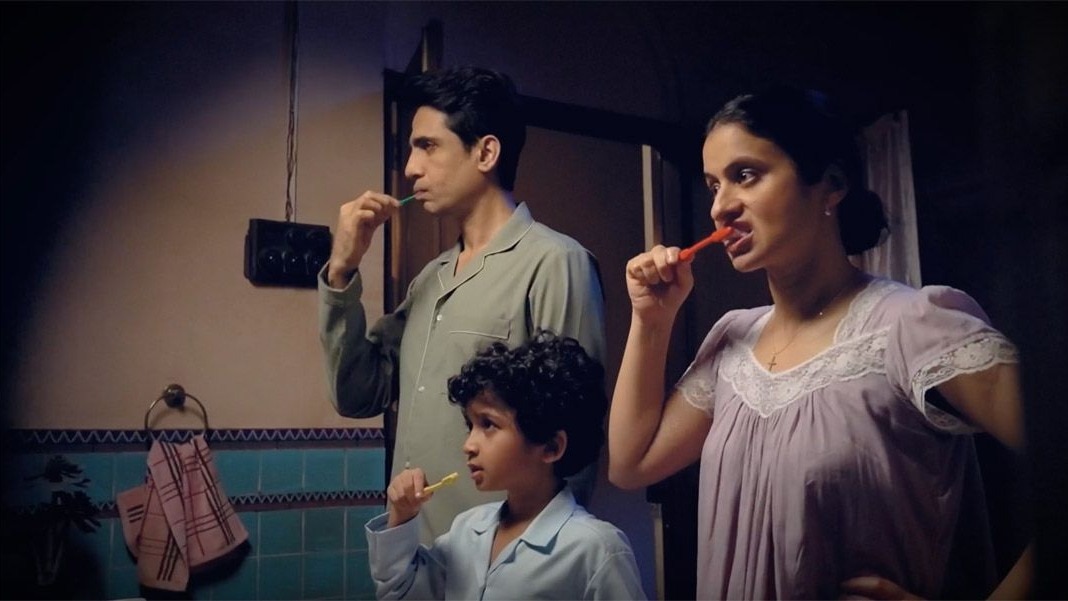
Set in 1990s Goa, Little Thomas follows seven-year-old Thomas, played by Hridansh Parekh, who desperately wants a baby brother. Convinced that his parents simply need to kiss in order to grant him his wish, Thomas tries to engineer romantic moments between them. Unfortunately, Jessie, played by Rasika Dugal, and Desmond, played by Gulshan Devaiah, are too consumed by marital friction and a struggling family bakery to entertain his innocent theories.
When his parents fail to provide straight answers about where babies come from, Thomas takes his investigation to others, prompting hilarious and mortifying reactions from the adults around him. Oza captures these interactions brilliantly. When Thomas asks about his origins, his father claims he came from Malaysia simply because his T-shirt reads Made in Malaysia. These relatable moments of parental evasion form the film's strongest asset, grounded in the unpredictable logic of childhood.
The 1990s setting enhances this nostalgia, featuring returning products like Coca-Cola, refrigerators remaining a luxury item, and local Goan expressions that provide a lived-in authenticity. Central to this atmosphere is young Hridansh Parekh, whose twinkling eyes, crooked smile, and earnest curiosity make his determination to fix his parents' marriage endearingly persistent rather than irritating.
Despite Parekh's natural charm, the film frequently falters as its screenplay runs out of steam. Too enamored with its protagonist's cuteness, the narrative loops through repeating cycles of charming questions and adult reactions, leaving what should be a layered family drama frustratingly surface-level. The central concept—exploring how children become unwitting casualties of unhappy marriages—is genuinely interesting, yet the film hesitates to dig deep into the emotional fallout of the parental conflict.
Strong lead performances rescue the project from its narrative limitations. Rasika Dugal brings restrained frustration and believability to Jessie, a woman balancing family survival and a cooling marriage at the expense of her own dreams. Gulshan Devaiah matches her with warmth and likability as Desmond, an idealistic man whose aspirations clash with practical family demands, preventing him from becoming a mere caricature.
While Oza demonstrates a clear appreciation for viewing the adult world through a child's perspective, the film relies too heavily on surface charm instead of exploring the complicated reality underneath. Little Thomas delivers a lovely premise, a promising young lead, and genuinely sweet moments, but ultimately struggles under the weight of its own embellishments.