


China is showcasing a new vision of urban mobility, combining artificial intelligence, robotics and electric vehicles to transform how people travel and access everyday services. In Shenzhen and Guangzhou, the push towards automation is visible in everything from robot-operated ice cream counters to pilotless electric aircraft designed to carry passengers.The developments are part of China's efforts to position itself as a global hub for technology, artificial intelligence and startups, with Shenzhen emerging as a major centre for innovation.India Today's Gaurav Sawant visited the 33rd APEC Economic Leaders' Meeting in Shenzen, showing an automated ice cream outlet with the help of which customers can place orders through a robot (Starboy), which communicates with them and processes their requests.Once an order is placed, another automated system prepares the ice cream, while a robotic arm collects it and a delivery robot brings it directly to the customer's table.
The entire process, from ordering and preparation to delivery, takes place without direct human intervention.The demonstration offers a glimpse of how Chinese companies are experimenting with robotics to automate routine services in restaurants and other public spaces. Visitors from different parts of China and abroad are also arriving to see the technology in action.PILOTELESS ELECTRIC HELICOPTERS AND AIR TAXIS China's ambitions extend beyond ground transportation.
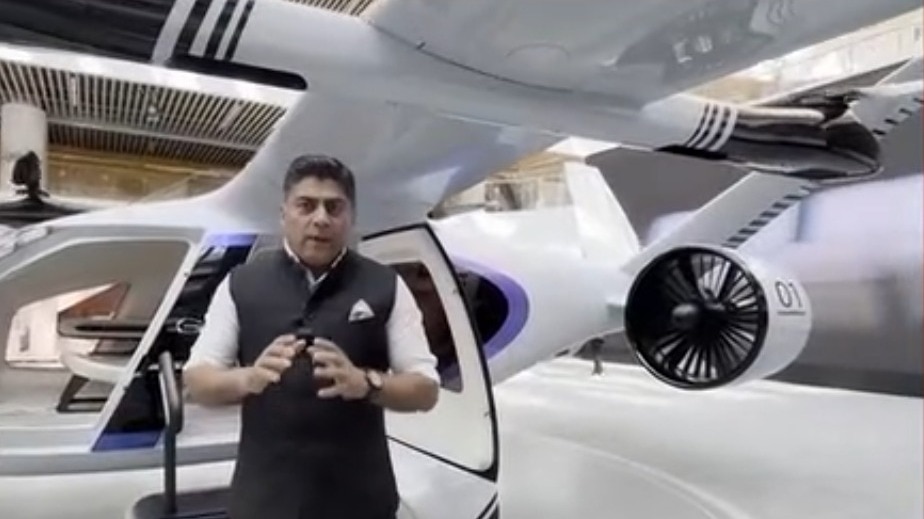
At GAC Motors in Guangzhou, electric vertical take-off and landing (eVTOL) aircraft are being presented as a possible future mode of urban and regional transport.One of the aircraft on display is a four-seater electric helicopter designed to operate without an onboard pilot. It has a claimed range of 200 km and can fly at an altitude of up to 500 metres on a single charge.The aircraft is designed to carry four passengers and features multiple rotors.
It could potentially connect cities such as Guangzhou, Shenzhen and Hong Kong.However, the four-seater remains a prototype and has not yet received clearance to carry passengers.Another aircraft on display is a two-seater pilotless electric air taxi. Unlike the four-seater prototype, this model has already attracted commercial interest, with the company claiming to have received more than 200 orders.The aircraft is designed to allow passengers to board directly, with its canopy closing before flight.
The proposed model points to China's growing interest in developing electric air taxis for short-distance transportation.ELECTRIC CAR MANUFACTURING AT SCALEChina's push towards electric mobility is also evident in its automobile manufacturing industry.At an AION manufacturing facility, the scale of production and factory automation offers a glimpse into the country's electric vehicle ambitions. The company claims that the facility can manufacture 800 cars a day, with automation accounting for around 25 per cent of the production process.The assembly line can also manufacture four different vehicle models, allowing the factory to switch between models without requiring separate production lines.The vehicles feature fully electric powertrains and advanced digital interfaces, including large touchscreen displays.AI AND ROBOTICS RESHAPE CHINA'S INNOVATION AMBITIONSBeyond transportation, China is using robotics and artificial intelligence to send a wider message about its technological ambitions.Shenzhen, home to major companies such as Tencent and DJI, has developed into an important startup and technology centre.
The city is increasingly being positioned as a hub for AI, robotics and emerging industries.The growing use of robots in restaurants, manufacturing and other services also raises questions about the future of employment. While automation could replace some jobs, it could create demand for new skills and specialised roles.China's approach increasingly combines electric mobility, robotics and artificial intelligence, with applications ranging from automated consumer services to passenger aircraft.- Ends