


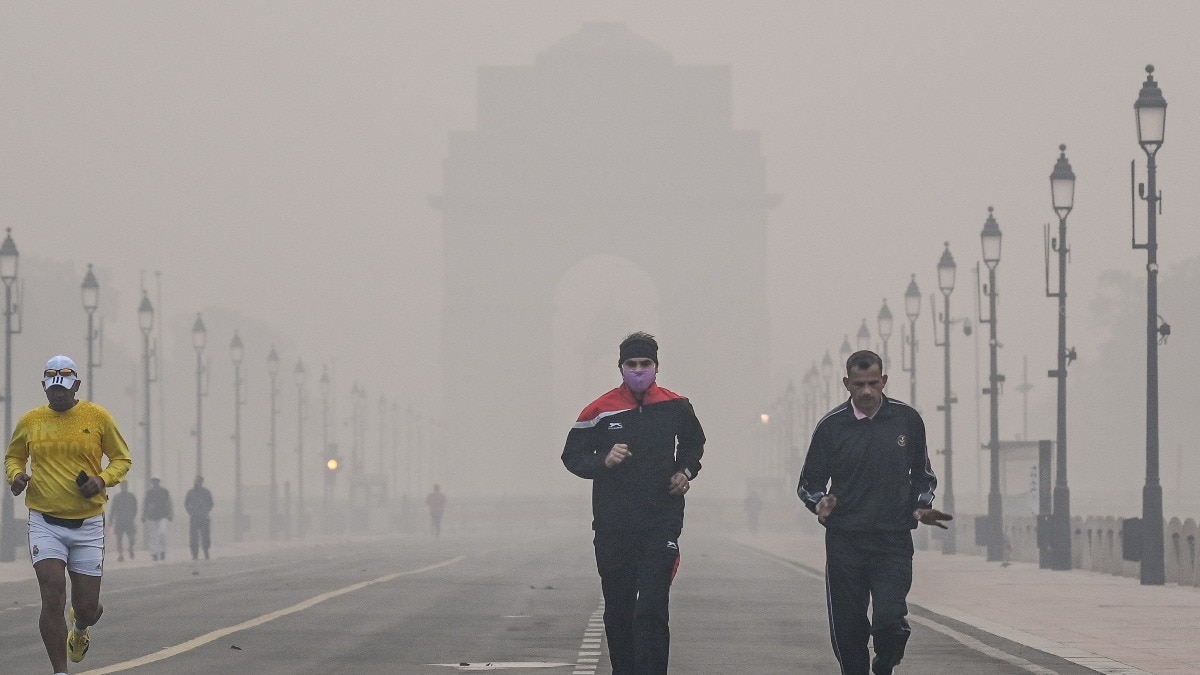
With Diwali approaching, Delhi's air pollution remains a major concern, as the city recorded an average Air Quality Index (AQI) of 366 on Saturday morning, placing it in the 'very poor' category.While the overall reading remained below the severe threshold, 22 monitoring stations reported AQI levels above 400, with RK Puram recording the highest reading of 442, according to Central Pollution Control Board (CPCB) data.According to the station-wise data, 22 monitoring stations in Delhi recorded AQI readings above 400, falling in the severe category. Another 29 stations reported readings above 300, categorised as 'very poor', while eight stations recorded AQI levels above 200, falling in the 'poor' category.The severe category can affect healthy people and seriously impact those with existing health conditions.
Prolonged exposure to very poor air quality can cause respiratory illness, while people exposed to poor air quality for an extended period may experience breathing discomfort. GRAP STAGE III INVOKED ACROSS DELHI-NCRThe worsening air quality prompted the Commission for Air Quality Management (CAQM) to invoke Stage III of the Graded Response Action Plan (GRAP) across Delhi-NCR on Friday, November 6, as a precautionary measure ahead of Diwali.The restrictions include a ban on several dust-generating construction and demolition activities, including excavation, piling, demolition, brickwork, road construction, painting and the movement of construction materials on unpaved roads.
Certain essential infrastructure projects, including metro, railways, airports, hospitals and national security-related works, are exempted, subject to pollution-control norms.The action plan also provides for the closure of stone crushers and mining activities across the National Capital Region.Vehicle restrictions are another key component of GRAP Stage III. Authorities have been directed to restrict BS-III petrol and BS-IV diesel four-wheelers in Delhi and the districts of Gurugram, Faridabad, Ghaziabad and Gautam Buddha Nagar.Restrictions also apply to certain diesel goods vehicles, with exemptions for those carrying essential commodities or providing essential services.SCHOOLS, OFFICES MAY SHIFT TO HYBRID, WORK-FROM-HOME MODEUnder the Stage III framework, state governments in the NCR and the Delhi government are required to conduct classes for students up to Class V in hybrid mode, wherever online classes are feasible.Students and their guardians can choose the online option.The Delhi and NCR state governments may also decide whether public, municipal and private offices should operate with 50 per cent staff strength, with the remaining employees working from home.The Central Government may separately take a decision on work-from-home arrangements for its employees.The CAQM has also urged residents to use public transport, share rides, walk or cycle for shorter journeys, avoid coal and wood for heating, and reduce unnecessary travel.
People whose jobs permit it have been encouraged to work from home.WHAT DO THE AQI CATEGORIES MEAN?The CPCB classifies AQI readings between 0 and 50 as 'good', 51 and 100 as 'satisfactory', 101 and 200 as 'moderate', 201 and 300 as 'poor', 301 and 400 as 'very poor', and 401 and 500 as 'severe'.An AQI reading in the severe category can affect healthy people and have a serious impact on those with existing diseases.The very poor category can cause respiratory illness on prolonged exposure, while the poor category can lead to breathing discomfort among most people after prolonged exposure.With a large number of monitoring stations reporting very poor or severe air quality, residents are being urged to limit exposure to polluted air and take precautions, particularly those with respiratory and other existing health conditions.- Ends