


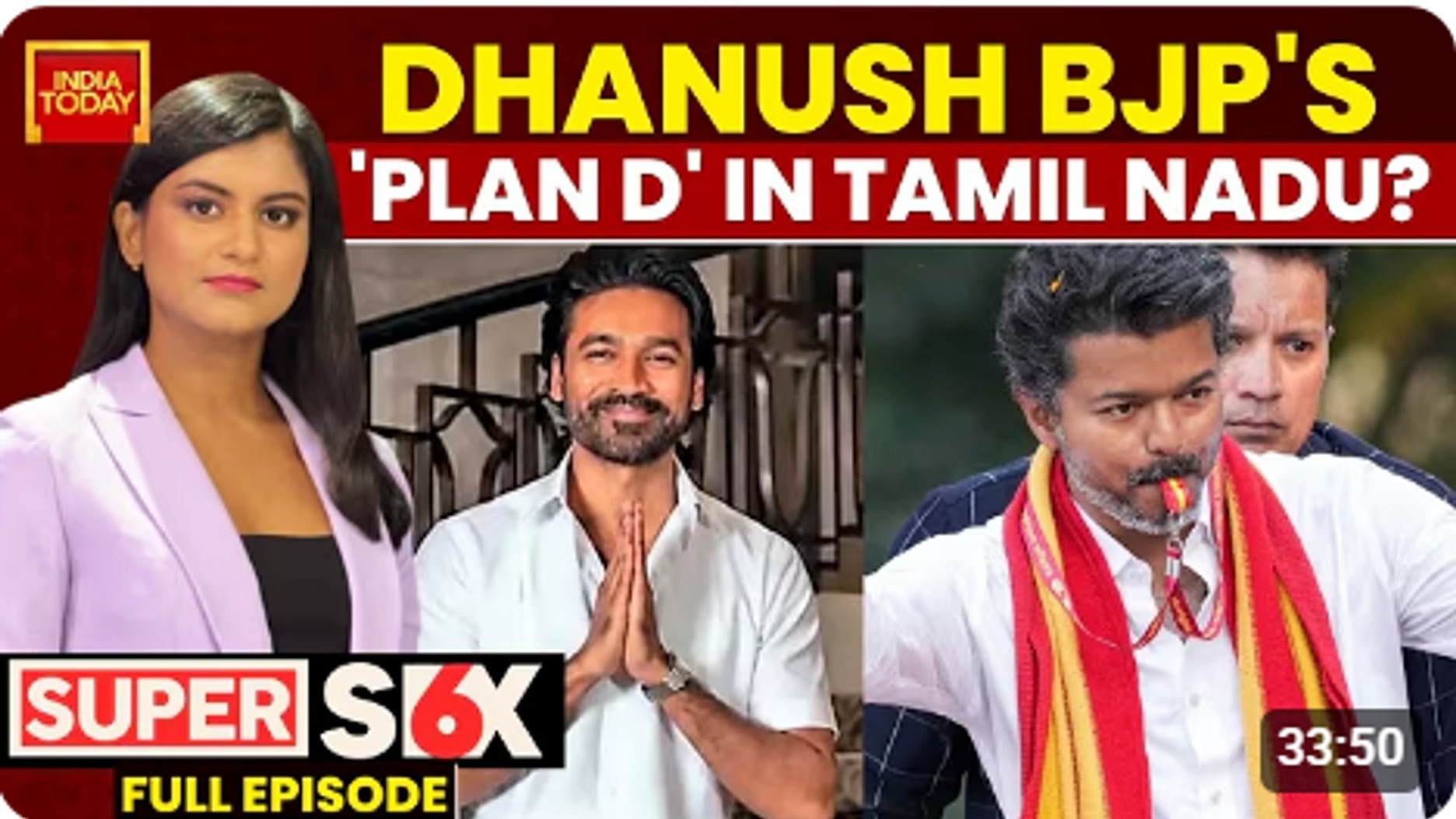
UPDATED: Oct 26, 2026 23:13 ISTThis news broadcast covers key regional, national, and international developments. Cyclone Arnab has intensified in the Bay of Bengal, prompting red alerts in Andhra Pradesh, Odisha, West Bengal, and Tamil Nadu, leading Andhra Pradesh Chief Minister Chandrababu Naidu to coordinate NDRF deployment and evacuations.
In Tamil Nadu, flood mitigation inspections took place at Chembarambakkam Lake, while police arrested former School Education Minister and DMK leader Anbil Mahesh Poyyamozhi over an alleged school approval bribery case. Political debates also focused on actor Dhanush following his outreach meeting with women fan club members.
In entertainment and legal news, representatives for Vijay Deverakonda and Rashmika Mandanna lodged a cybercrime complaint in Hyderabad concerning fabricated online material. Meanwhile, public outrage in Kerala followed the granting of bail to a minor involved in a fatal vehicle collision.
Additionally, Karnataka Chief Minister DK Shivakumar cautioned IT firms regarding local hiring practices, and US political discussions addressed remarks made by Donald Trump regarding singer Nicki Minaj. Read MoreVIDEOS FROM OTHER SECTIONSLATEST VIDEOSGlobal Political Shifts: Tara Kartha, Saul Satka & Alexander Slater on Key ElectionsA panel of international affairs experts analyses major political shifts shaping the global order, including the presidential election in Brazil, upcoming polls in Israel, and the United States midterm elections.
Journalist Felipe Ferraz outlines President Lula da Silva's remarkable electoral comeback against Flávio Bolsonaro, highlighting reduced abstention and allegations of foreign interference. Security analyst Saul Satka evaluates Israel's political trajectory, asserting that foreign policy stances regarding regional threats and strategic ties with New Delhi remain firm regardless of leadership changes.
Alexander Slater, former managing director of the US-India Business Council, assesses how American domestic political turbulence and trade tensions could impact US-India ties. Strategic affairs expert Dr.
Tara Kartha notes the economic pressures and inflation driving anti-incumbency across nations, stressing New Delhi's imperative to maintain diplomacy while managing regional conflicts, remarking, 'Barring the US where anything could happen and does, the rest of it is handling things as we go.'Jamia Students Clash with Police, Reject Admin Order, Demand Poll DatesTension escalated at Jamia Millia Islamia University as student protests demanding the restoration of student union elections entered their twelfth day. Students gathered inside and outside the campus, attempting to climb locked gates after university authorities blocked entry.
Delhi Police and paramilitary personnel, including CRPF and women forces, were deployed to barricade the gates and detain protesters. Two students continued an indefinite hunger strike under yellow tents.
Although the registrar's office issued a notification agreeing to conduct elections and withdraw pending disciplinary actions, protesting students rejected the order, insisting on a concrete date and timeline. With university gates barricaded and police action underway, the deadlock between students and the university administration has intensified.Lula's Brazil Win, Israel Polls, US Midterms: What Global Votes Mean for IndiaOn News Track, Maria Shakeel examines the geopolitical implications for India following key political battles across Brazil, Israel, and the United States.
In Brazil, President Luiz Inacio Lula da Silva has secured another term, defeating Flavio Bolsonaro in a closely contested runoff election. The report highlights India's potential to deepen bilateral trade towards thirty billion dollars by 2030, strengthen BRICS cooperation, and champion reforms in international institutions.
Meanwhile, in Israel, Prime Minister Benjamin Netanyahu faces an electoral challenge from Gadi Eisenkot amid regional tensions involving Iran, though strategic defense and technology ties with New Delhi are expected to retain bipartisan backing. In the United States, upcoming midterm elections test Donald Trump and congressional control, potentially reshaping trade tariffs and H-1B visa policies.
Panelists Felipe Ferrazu, Saul Satka, Alexander Slater, and Dr. Tara Kartha analyze domestic polarization, foreign interference perceptions, and diplomatic balancing strategies for New Delhi across these shifting global arenas.Elections in Brazil, Israel, and US: What Global Shifts Mean for IndiaPolitical battles in Brazil, Israel, and the United States are poised to impact global equations and foreign policy calculations for New Delhi.
In Brazil, Luiz Inacio Lula da Silva secured another presidential term, presenting opportunities to expand bilateral trade toward a thirty billion dollar target by 2030 and deepen cooperation within BRICS. Meanwhile, Israel's elections test Prime Minister Benjamin Netanyahu against former military chief Gadi Eisenkot, with critical strategic pillars like defence, intelligence, agriculture, and technology hanging in the balance alongside wider West Asian stability.
In Washington, the upcoming US midterm elections could determine congressional control and influence trade policies, tariffs, and H-1B visas relevant to Indian professionals and businesses. Across Latin America, West Asia, and the United States, New Delhi faces the challenge of protecting national interests, navigating diplomatic shifts, and turning evolving international political developments into domestic economic opportunities.