


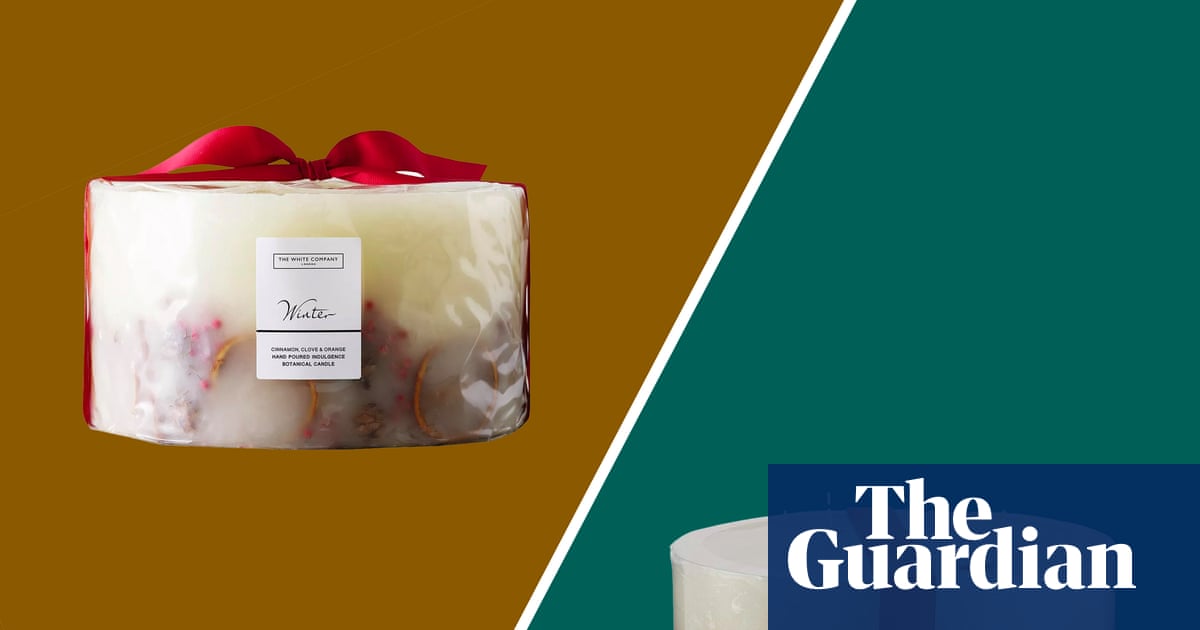
For fans of the festive season nothing is more Christmassy than lighting a super-sized botanical candle with its trim of orange slices and berries.But as the notes of cinnamon and clove fill the room will you be burning money spent on the White Company’s £95 “winter indulgence” candle that customers describe as the “scent of Christmas”. Or have you followed TikTok’s advice and bought the Aldi “dupe” for £25.Dupes are products that claim to offer a similar experience to a high-end item though do not claim to be that product.
They were originally a Gen Z obsession but have become a mainstream shopping trend at a time of strained household finances.“No matter what age you are, how much money you’ve got to spend, everyone wants to ‘luxe it up’ with a dupe,” says Catherine Shuttleworth, a retail consultant and chief executive of Savvy Marketing.“The message is ‘why not be smart like me saving cash but still looking good’,” she says.“In the case of homewares, a high street dupe of a luxury branded candle can look and smell just as good as the real thing, and will your visitors really notice that your table lamps are from B&M not the White Company?”Dupe culture is being supercharged by social media, particularly TikTok. More than 30 million people across the UK now use TikTok each month, according to the company, with Gen-Z’ers admitting that seeing products sell out or go viral makes them more likely to buy them.US retailer Quince’s £50 red cashmere jumper alongside one from Cos or Reiss that would cost three times more.
Photograph: QuinceData firm YPulse has been tracking consumer attitudes to dupes for several years and Tori D’Amico, managing content editor, says: “The idea that a dupe can be a true replacement for a luxury item is still prevalent. Dupes are not shameful or embarrassing to own.
Young consumers brag online about finding a good deal and share it with the masses.”YPulse’s most recent research found that 44% of UK 13- to 39-year-olds have bought a dupe in the past year. When asked, just over half (53%) of this age group agreed that “the quality of dupe/fake luxury items makes me less likely to want to purchase a real luxury item”.Dupes are particularly prominent in the beauty world but are also found in other sectors including food, furniture, homeware and designer fashion.US “dupe” retailer Quince, which sells upmarket products ranging from candles to cashmere sweaters, has just launched in the UK.
Alongside each product on its website it suggests the saving you are making against more expensive brands. A £50 woman’s red cashmere jumper, for example, is pictured alongside graphics comparing it with jumpers from Cos and Reiss costing three times as much.Fragrance, in particular, is a popular target.
There are more than 50,000 videos on TikTok under the combined hashtag #perfumedupe and #perfumedupes, where influencers rate imitation fragrances against famous names and tell viewers where to find them.With fragrances a sought-after Christmas gift the platform is awash with content extolling these cheaper scents. Instead of spending nearly £130 on Mugler’s Alien try Zara’s Violet Blossom for £15.99, suggests one.
Or, if you can’t afford Le Labo’s Another 13, try Marks & Spencer’s Aura Ambrette, a snip at £22.50.Social media platforms are awash with recommendations for saving on high-end perfumes. Instead of spending £130 on Mugler’s Alien, try Zara’s Violet Blossom for £15.99, suggests one.
Photograph: Muglers/ZaraIn TikTok Dupeland budget supermarket Aldi is lauded as a perfume house with its Lacura brand tipped to offer substitutes for high-end favourites ranging from Paradoxe to Flowerbomb and Baccarat Rouge – for £7 a bottle.“These cut-price products are in focus right now as consumers look for cheaper alternatives in response to rising prices,” says Eric Mills from market research firm NielsenIQ. In a recent survey, 38% of UK consumers said that in the past 12 months they had switched to lower-priced brands to manage their shopping bills.“The buyers of these brands are often thought of as only younger consumers, but while Gen Z are key spenders, it’s millennials who account for the greatest proportion of sales,” he adds.skip past newsletter promotionafter newsletter promotionAldi’s Lacura brand offers substitutes for high-end favourites ranging from Paradoxe to Flowerbomb and Baccarat Rouge 540.
Photograph: LidlIn a microcosm of what is likely happening elsewhere in the market, the number of people buying dupe fragrances online is up 17% in the past year which is ahead of the overall market.With the continued adoption of AI tools, Mills says: “It’s easy to imagine dupes gaining further traction, as consumers can simply ask a chatbot for a cheaper alternative to their favourite luxury scent.”With dupes copying well-known brands without pretending to be the real thing they occupy a space somewhere between authentic and fake. While consumers might love dupes, the targets are less enthusiastic.Celebrity makeup artist Charlotte Tilbury, whose £350m fortune stems from the sale of her eponymous beauty empire to Spanish fragrance and fashion group Puig, recently told the BBC that “when you dupe, you dupe the consumer”.“It is not Charlotte Tilbury … and it is not performing the way that my products do,” Tilbury says of cheaper imitations. “If I could do them for those prices I would.”Charlotte Tilbury has had some success pushing back and, in 2019, brought a successful copyright case against Aldi over the designs on its Filmstar Bronze & Glow palette which the supermarket had copied.Claire Breheny, partner and head of trade marks at Mathys & Squire suggests that business owners should be requesting that dupes be taken down from online platforms or social media.
Brand owners “need to protect their packaging and get-up, not just their name.“The risk for consumers is that similar packaging doesn’t guarantee similar quality, ingredients or performance – although a cheaper alternative isn’t necessarily always going to be inferior.”With the cost of living crisis only making dupes more attractive to shoppers, Savvy Marketing’s Shuttleworth says that nearly 80% of shoppers its survey polled were happy to selectively spend more on treats and luxuries where they think it’s worth it.“The challenge for top brands like Charlotte Tilbury, is that they need to be able to convince shoppers the quality difference is always worth paying for.”