


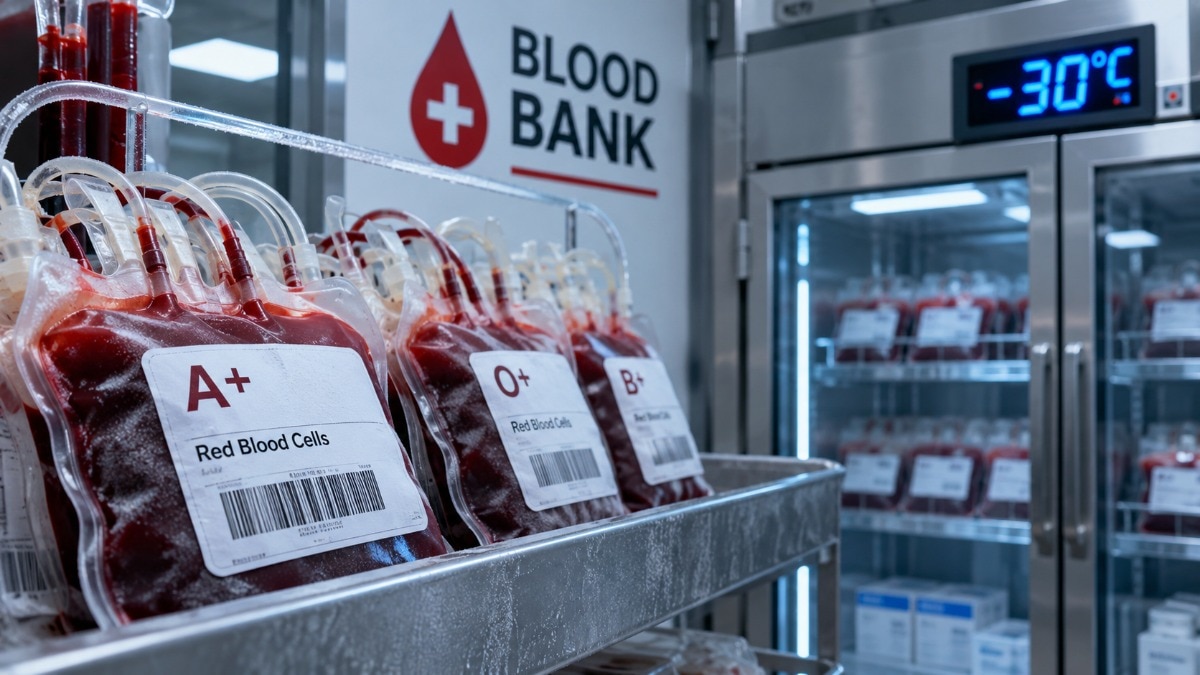
The cyberattacks in parts of Europe are getting scarier. After multiple attacks on supermarket cold-storage facilities, hackers have now targeted blood-storage facilities in France.
According to reports, the attackers remotely changed freezer settings from -30 degrees Celsius to 110 degrees Celsius at facilities operated for France's national blood agency, Etablissement Franais du Sang (EFS).An on-duty technician reportedly noticed the abnormal temperature spike overnight, allowing emergency teams to intervene before blood samples and frozen plasma were permanently damaged.The cyberattack took place between November 1 and 2. France's Health Ministry said the incident was contained without affecting hospital supplies or blood transfusion services.But this was not an isolated incident.
The attack on France's blood-storage facilities comes after a series of similar cyberattacks on supermarket refrigerators across at least 11 European countries, including Belgium, Germany, Ireland, Italy, the Netherlands, Sweden and the UK. And that is what makes the situation particularly worrying.
Hackers are increasingly finding ways to target everyday infrastructure, turning something as ordinary as a refrigerator into a potential weapon.How did hackers hack the fridges?The attackers reportedly gained access to internet-connected refrigeration controllers and remotely changed their temperature settings. These systems allow technicians to monitor and adjust cooling remotely, but they can also become easy targets when poorly secured, running outdated software or directly accessible online.
Last month, the hackers they reportedly took control of cooling systems in as many as 700 supermarkets in France, raising temperatures from around -27 degrees Celsius to more than 50 degrees Celsius. Some stores reported losses exceeding 130,000 euros, with tonnes of food, including meat, dairy and frozen products, going to waste.Now, the focus appears to have shifted from supermarket shelves to something far more critical: lifesaving blood supplies.In the latest incident, the attackers allegedly breached Coolworld, a refrigeration maintenance contractor working with EFS, and reprogrammed the cold-storage units.
While EFS initially said the affected containers held routine health-monitoring blood samples, officials later confirmed that plasma intended for transfusions was also stored there.The attacks also come at a time when AI is becoming more powerful and making cyberattacks easier to automate and scale. It is also raising concerns about how quickly hackers could exploit vulnerabilities in everyday connected devices.However, there is no evidence so far that AI was used in these attacks.Who is behind these attacks?
That remains a mystery. No hacking group has claimed responsibility for the supermarket or blood-storage attacks, and authorities have not reported any ransom demands.- Ends