


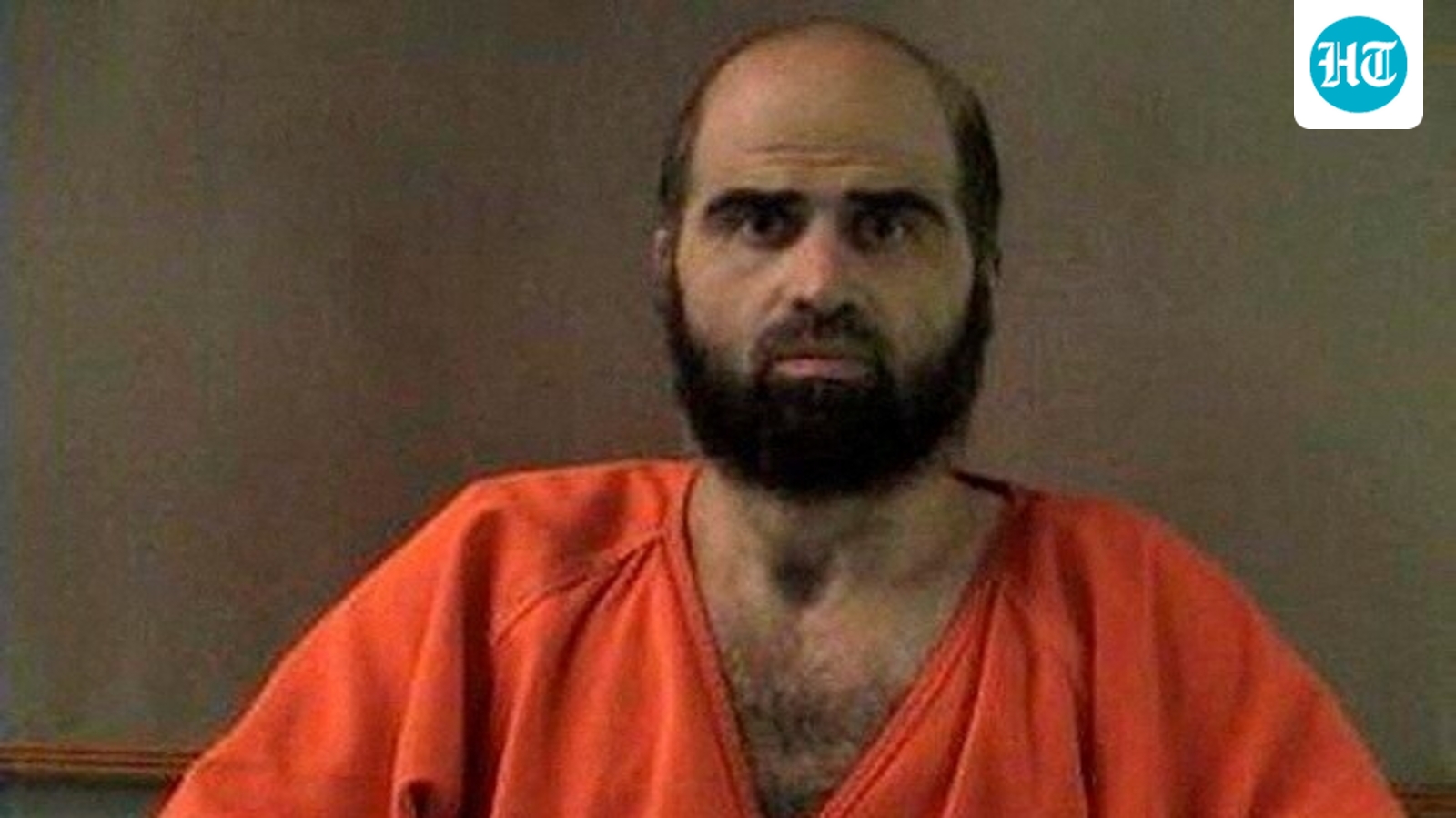
The Pentagon has announced plans to execute former Army Major Nidal Malik Hasan by firing squad. Hasan killed 13 soldiers and injured 31 others at Fort Hood in Texas on November 5, 2009. He was sentenced to death in 2013 after a court-martial, with his execution currently scheduled for December 3.
Pentagon spokesperson Sean Parnell stated that the method was approved after a recommendation by Defense Secretary Pete Hegseth. President Donald Trump publicly backed the plan, calling the convicted shooter a maniac who deserves the death penalty.
A firing squad execution is a historical method of capital punishment. Defense Secretary Hegseth indicated that Hasan would face a firing squad composed of soldiers. Historically, the U.S. Army frequently carried out such executions for offenses such as desertion, with hundreds of soldiers sentenced to death during the Civil War. The last U.S. military member put to death by firing squad was Private Eddie Slovik, who was executed for desertion on January 31, 1945.
Capital punishment by firing squad remains legal in the United States. In an 1879 unanimous decision, the U.S. Supreme Court ruled that execution by firing squad does not constitute cruel and unusual punishment under the Constitution. The Supreme Court also cleared the way for South Carolina to conduct a firing squad execution. Currently, five states permit execution by firing squad: Idaho, Mississippi, Oklahoma, South Carolina, and Utah. Additionally, the administration stated that firing squad executions would be permitted within the federal prison system.
Questions have arisen regarding plans to broadcast the event. While Defense Secretary Hegseth stated that the public would be able to watch the execution to emphasize serious consequences for such crimes, President Trump noted that no final decision has been made regarding a public broadcast.
Records indicate that no government globally has ever livestreamed an execution, according to the Death Penalty Information Center. While federal prison system regulations ban recording or broadcasting executions, military rules do not contain the same explicit restrictions. State laws typically restrict execution witnesses to government officials, family members, legal counsel, and a small group of media representatives. In 2001, a judge rejected an internet company's request to livestream the execution of Timothy McVeigh.